

 See My Latest Article on HelloNation
Are home mold testing kits accurate?
Home mold testing kits can detect mold or mold spores in a collected sample, but they usually cannot determine whether a home has a serious mold problem, where the moisture is coming from, or what cleanup is needed. Their results may be technically accurate as a snapshot of one sample, yet still provide an incomplete or misleading picture of indoor conditions.
The main limitation is that mold is naturally present in outdoor air and household dust. Mold spores can enter through doors, windows, HVAC systems, clothing, and normal household activity. A positive result does not automatically mean the home has hazardous mold contamination.
The U.S. Environmental Protection Agency states that there are no federal standards establishing a “safe” or “unsafe” concentration of airborne mold. Because of that, a test result cannot be compared with a universally accepted indoor limit. ([epa.gov](https://www.epa.gov/mold/mold-testing-or-sampling?utm_source=openai))
What do DIY mold kits usually measure?
Most home kits use one of three approaches:
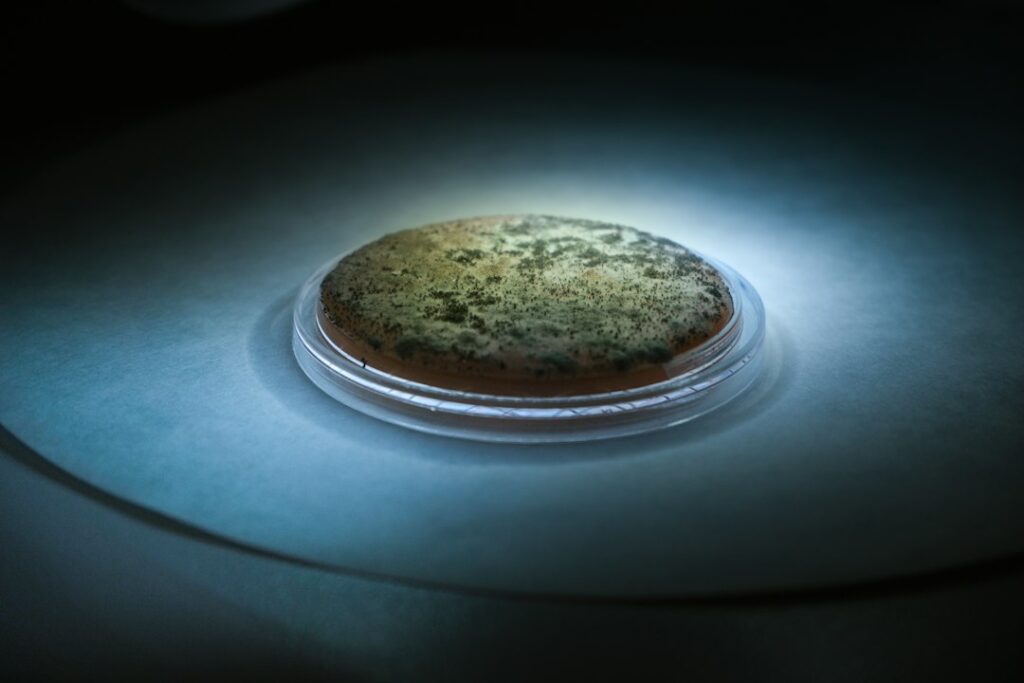
- Petri dish or settle-plate kits: An open dish is left in a room so particles settle onto a growth medium. Visible colonies may develop over several days.
- Air-sampling kits: A pump or collection device gathers airborne particles for laboratory analysis.
- Surface-swab or tape-lift kits: A sample is collected from a visible spot and examined for mold or fungal material.
Each method answers a different question. A settle plate may show that some organisms grew under the kit’s conditions, but it does not measure the concentration of mold in room air. A swab may confirm that a particular surface contains fungal growth, but it says little about other rooms, hidden cavities, or airborne exposure.
Even laboratory-analyzed samples are only as useful as the sampling plan. The location, timing, weather, indoor activity, ventilation, humidity, and handling of the sample can all affect the result.
Why can a kit produce a misleading result?
A home kit can produce a negative result even when a moisture problem exists. Mold may be hidden behind drywall, beneath flooring, inside wall cavities, under cabinets, or around ductwork. The sample may simply miss the affected area.
A kit can also produce a positive result when there is no unusual indoor mold problem. Outdoor spores may enter through an open window, or dust may be disturbed during cleaning, moving furniture, or running the HVAC system.
The following factors commonly affect results:
- A sample is taken in the wrong room.
- The dish or swab is exposed too long or too briefly.
- The sample is contaminated during handling.
- A single sample is treated as representative of the entire home.
- No outdoor comparison sample is collected.
- The report lists mold types without explaining their significance.
- The test detects spores but does not identify the moisture source.
A colorful growth plate or a long list of fungal names can appear authoritative, but neither automatically establishes a health risk or a need for extensive remediation.
If mold is visible, is testing necessary?
Usually, no. Visible mold growth is already evidence that a moisture problem needs attention. Testing often does not change the basic priorities: stop the water intrusion, dry affected materials, clean appropriate surfaces, and determine whether porous materials must be removed.
The EPA explains that sampling is generally unnecessary when mold is visible. It may be useful in more limited situations, such as investigating hidden contamination, evaluating a disputed condition, helping define the extent of a problem, or checking whether remediation appears effective. ([epa.gov](https://www.epa.gov/mold/mold-testing-or-sampling?utm_source=openai))
For a small area on a cleanable surface, the most useful information may come from documenting the location, identifying the moisture source, and monitoring whether the area remains dry after cleaning. Testing should not delay repairs when a roof leak, plumbing leak, condensation problem, or flood-related moisture is present.
What does a home mold test not tell you?
A DIY test generally cannot answer several questions residents commonly have:
- Is the mold affecting anyone’s health?
- Is the detected mold dangerous?
- How far has the contamination spread?
- Is there hidden mold inside a wall or ceiling?
- Has a water-damaged building material become structurally weak?
- Does the HVAC system need cleaning?
- Has cleanup been completed adequately?
- Is the indoor air safe for a particular person with asthma or allergies?
Mold results also cannot diagnose illness. Symptoms such as coughing, wheezing, congestion, irritated eyes, and skin symptoms can have many causes. Anyone experiencing persistent or serious symptoms should discuss them with a qualified medical professional rather than relying on a home test report.
How does Columbia’s climate affect mold concerns?

Homes in Columbia, SC experience warm, humid conditions for much of the year, along with periods of heavy rain and storm-related water intrusion. Those conditions can increase indoor moisture when bathrooms have weak exhaust, air-conditioning systems are oversized or poorly maintained, crawl spaces are damp, or leaks are not dried promptly.
Humidity and condensation can be more informative than a test plate. A musty odor, recurring staining, peeling paint, damp materials, or condensation around supply vents may point toward a moisture-control problem even if a kit shows little growth.
Practical observations include:
- Check under sinks, around washing machines, near water heaters, and beside exterior walls.
- Look for staining or softened materials after storms.
- Inspect crawl-space access areas for damp insulation or standing water.
- Use a humidity meter to identify rooms that stay unusually damp.
- Confirm that bathroom and kitchen exhaust fans vent outdoors.
- Replace or dry water-damaged materials promptly.
Moisture is the condition that allows mold to grow. Testing without correcting moisture rarely solves the underlying problem. ([epa.gov](https://www.epa.gov/indoor-air-quality-iaq/indoor-microbiome?utm_source=openai))
When can a home test be useful?
A kit may provide limited value as an initial screening tool when there is no visible mold but there is a persistent odor, a history of water damage, or uncertainty about whether a particular surface contains fungal growth.
If using one, treat the result as supporting information rather than a final diagnosis:
- Follow the instructions exactly.
- Record the room, date, weather, ventilation, and recent household activity.
- Avoid comparing results from different brands or methods.
- Do not interpret a numerical result without understanding the sampling method.
- Keep photographs and moisture observations with the report.
- Do not disturb suspected mold merely to obtain a sample.
A professional assessment is more appropriate when contamination may be hidden, a large area is affected, sewage or floodwater was involved, occupants have serious respiratory concerns, or cleanup decisions could affect a rental, insurance, real-estate, or legal dispute. In those situations, the value comes from a documented inspection and a defensible sampling plan—not simply from sending a swab to a laboratory.
What is usually more useful than a DIY kit?
For most households, a moisture investigation is more useful than a general mold test. Start by asking:
1. Where is water entering or accumulating?
2. Which materials stayed wet, and for how long?
3. Is the affected area growing, recurring, or spreading?
4. Are there signs of concealed damage?
5. Can the area be safely cleaned, or are porous materials involved?
South Carolina’s environmental agency notes that there are no state or federal mold or indoor-air-quality standards for homes, and it does not inspect or test private residences for mold. That makes careful observation, moisture control, and appropriately designed evaluations especially important. ([des.sc.gov](https://www.des.sc.gov/community/disaster-preparedness-relief/hurricanes-floods/indoor-mold?utm_source=openai))
A home test kit can sometimes confirm that mold-related material is present in one sample. It cannot, by itself, determine the size, cause, health significance, or cleanup requirements of a mold problem. For most situations, visible conditions and moisture history provide more actionable information than a single DIY result.